I’ve been teaching game development at the University level for a little over 4 years. As a generalist, I’ve taught a pretty wide variety of classes, from Level Design, to Scripting, to VR Design, to Project Management.
During the summers I often run summer camps for high school students, and during those camps I teach the full pipeline - concerting and iteration, sketching and planning, creating art assets (modeling, texturing, rigging, animating), world building, scripting, and integrating art/sound/VFX.
I remember my college days where I was told being a generalist was a bad idea, and that if I wanted to be successful I needed to choose an area to focus. Although most of my jobs have not utilized all of my skills, I have never struggled to find work in the game industry, and many of my employers have appreciated my ability to jump seamlessly into other roles when needed.
At my current University, the topic often comes up in discussion among faculty of how to get our students to focus, to keep them from becoming generalists.
Here’s my two cents - if you can code, you will always have that to fall back on, there will always be someone who will pay you to write code.
If you can make art, you will always be able to bring your ideas to life. There may be times when it will be hard to find someone to pay for your art, that comes with the territory, but that shouldn’t keep you from creating great things.
If you can lead a team, you will find ways to do so, even if you are not formally given positions of authority.
Don’t shy away from being a generalist, if you are passionate about many different things, lean into that passion and become great.
On the other hand, if you have strong skills in one area and no interest in strengthening the other areas, then by all means specialize. Being a generalist is not for everyone, and many game studios rely on having very specialized skills on their team.
Showing posts with label indie dev. Show all posts
Showing posts with label indie dev. Show all posts
Thursday, October 10, 2019

Friday, October 5, 2018
The Making of Cosmos Arena

Cosmos Arena is a local multiplayer party game for up to 4 players. Right now it is PC only but we hope to make an XBox port as well.

I'd like to share with you the story of how Cosmos Arena came to be.
Getting Started
My team started working on this project in 2016 when I was still working a full time job in AAA. I launched my studio Astire Games and brought on some contractors, most of whom were also working day jobs, so we were moonlighting to get to the first prototype.First Prototype
In this prototype we started on the core mechanics - character movement and traps
At some point I realized that AAA work was not satisfying my drive as a developer, and working nights and weekends on Cosmos Arena wasn't enough for me. On top of working AAA and moonlighting, I was also teaching Game Design as an adjunct faculty.
Leaving a comfortable day job for a side project is a risky move, and I don't think I would have done it if not for the teaching gig. I was pretty confident I could live on my teaching income for at least a few months, so I decided to take the leap and I left AAA to go indie.
Funding
Anyone who has tried to get a project up off the ground knows that it takes money. Even if you are the only one working on the project, you at least need enough for yourself to live on, but if you plan on having other people work on the project then you need a starting fund.I was teaching 8 hours a week, and I figured if I really stretched I could live on that income. But I also wanted to have other people working on this project...There wasn't a particular skillset I was looking for since it was all prototyping at that point, but working alone can be lonely and it can be hard to stay motivated. So I found some friends who were looking for a side project who were willing to work on the cheap, and I dug into my savings from my time working in AAA.
In a lot of ways I got really lucky - I have some very talented and supportive friends with a wide range of skills, and it wasn't long at all before we had a second prototype with character animations, obstacles, sound effects, and a start screen.
Second Prototype
Contract Work
Self-funding Cosmos Arena had a limited lifespan, which I knew going in. I had hoped to get the prototype to a point where I could start soliciting outside funding.This is where my luck started to run out...I had basically no idea how to get funding for a project. I tried looking for potential publishers, but the prototype was just not ready to meet those expectations. On top of that, I hadn't been able to find an environment artist, and the character artist and one of the programmers were leaving for new full time jobs.
I managed to rough out the scene with some placeholder art from the Unity Asset Store, but it still needed a lot of work and I was running out of money and people.
First Art Style
Around this time I decided I either needed to get a job, or find some contract work for my team. As it happened, a contract project kind of fell into my lap. I had a programmer and a sound designer still on my team, and I was contacted by a couple who had a vision for a children's app and a budget for development. They already had some art made for it, so I jumped at the opportunity.
Contract work was great, it allowed me to keep my team together and add some new folks, and it added to the company bank account. But it was time-consuming, and it pretty much put Cosmos Arena on the back burner for several months.
Showcasing
At a couple of different times, we had an opportunity to showcase Cosmos Arena at local events. These opportunities were fantastic for getting me motivated to dive back into the project - usually there would be about 2 weeks to a month where I knew the game would be showcased and I wanted it to have something new to show, so there would be a hard push to get in new content and new features.Showcase Build
Our showcase opportunities included the Intel Buzz Workshop at the Austin Games Conference, the Intel Indie Lounge at the Game Developers Conference, the Austin Game Dev booth at SXSW, and the IGDA booth at Dreamhack.
Second Showcase Build
Interns
Due to the sporadic nature of development on this project, all of the original team moved on to other things at various points during this timeline. Still on a tight budget, I decided to leverage my position teaching to find rising new talent looking for opportunities.Initially I started taking interns at my company and letting them work on their own projects, which I then helped them publish. Finally I decided I had found the right interns for Cosmos Arena, so I offered them paid contract internships to spend the summer building levels.
Bringing on interns also coincided with finally having an artist to set the art direction of the project.
New Art Style and Levels
Art Direction and Iteration
There has been a lot of iteration and changes to the art style over the past two years, but honestly most of that iteration happened in the last 3 months. Here is a glimpse of some of that iteration...


Game Mechanics and Iteration
Not only did the art style change dramatically over time, also our core mechanics and design have changed. We've added new win conditions for different levels, replaced a health/damage system with a shield and one-hit-kill, we added a ghost mode when a player dies so they can take revenge on their killer, and we've incorporated building and planting to offset the killing and destroying.Development
Alpha Release
We just hit our Alpha milestone and decided to make the game available for free for a limited time while we work through some bugs and collect feedback. If you've enjoyed learning about our development process, we would love for you to try the game and give us your feedback :)Thanks for reading and thanks for playing!
Sunday, August 20, 2017
Game AI: Non-Human Behavior Part 3
This is part 3 of a series, if you are just joining in be sure to start at part 1!
Nature is weird, and full of constant surprises.There are a lot of things in nature that we still don't understand.Take for example these thousands of circles in the Kalahari desert:
We don't know what causes them...Scientists have suggested numerous options - but ruled all of them out - including poisonous plants, insects, and magnetism. There is so much about our planet that is outside of our understanding, and so much to draw inspiration from.
People think science is pretty cool, that's why we have a large chunk of the entertainment industry using science to draw in their audience. As game developers, we can use that fascination to our advantage, to get our players excited.
I've been playing a game recently called Niche where the player controls a herd of animals and tries to help them survive. The game does some really interesting things with reproduction and genetics, allowing the player to alter the chances of certain traits, and choosing which animals will mate with each other. This game does a really great job of taking elements of nature and science that people find fascinating, and then turning those elements into engaging gameplay mechanics.
Another game that I think does a great job with this is Factorio. In Factorio, the player plays as a character stranded on an alien planet, and the player needs to collect resources to build a rocket to get off the planet. A lot of the resources can't be used as raw materials, so the player builds a lot of different kinds of processing plants, essentially creating an entire factory from scratch. But the alien species living on the planet does not want to see their beautiful planet destroyed by pollution and over-harvesting. The more the player builds and expands, the more of the natural planet gets destroyed, and the angrier the aliens become. The aliens will attack the player and the base, because they are defending their planet. I really like the way this game makes you think about how your actions are impacting nature, and finding more sustainable and less invasive ways to do things is more challenging but helps keep you at peace with the creatures inhabiting the planet.

I've design characters and AI for a handful of games, and I've learned a few lessons from the process. Instinctively, it might seem that character design, combat, and behavior are all distinct design challenges that can be handled independently, but I've found that when it comes to the player interacting with the characters, these three things are very tightly intertwined, and they deserve to be designed together. There are games that have characters that just make sense because their character design feels perfectly aligned with their AI behavior, and the transition from behavior to combat seems completely natural and expected for how that character is perceived. On the other hand, I'm sure we've all played games where a character feels out of place, their behavior does not make sense for what that creature is, and the transition to combat feels clunky and unexpected.

I personally have fallen into this trap, and I'd like to think that I learned from my mistakes, and hopefully you can too. The very first game I worked on where I designed the AI and combat was a co-op exergame where two players work together to defeat giant robot spiders in an underground subway system.
We spent a lot of time designing and researching the exercise portion, and not a lot of time thinking about our enemies. We knew we needed something that would be immediately recognized as evil, we needed the player to be able to attack from a distance, and we wanted the enemies to swarm the player. A couple of interesting things that came from our design was that the spiders would come out of webs in the corners, so players could predict where they would come from, and some spiders could attack from a distance by spitting sticky webs at the player to temporarily trap them.
This project was over 5 years ago. I was the lead designer on this project so I was responsible for designing engaging enemies, but it was my first time designing anything related to AI, so I treated the character design, AI behavior, and combat completely separately, because I didn't know any better. I took the easy route - enemies were mainly different in their health and how much damage they could do, with the exception of the web-spitting spiders, and the only distinction for the boss was that she was huge and much stronger than the little minions, but no interesting differences and no narrative reason why there was one enormous spider surrounded by a horde tiny spiders.

Why are they robot spiders? What made them? The spiders are pretty scary, but their creator is probably pretty terrifying. Why are they attacking the player? Blood lust? Or are they defending their nest? Perhaps seeing a mother spider with an egg sac could help shed some light on their behavior. If I could go back and do it again, I would begin by considering why are these characters here, and what is their incentive to attack the player. I would also draw inspiration from nature to come up with more interesting behavior instead of run in and attack.
Spiders are bizarre but highly specialized hunters, with unique features and behavior adapted to any environment they live in.
This is a Portia Spider hunting another spider by dropping down on it from above. The Portia Spider specializes in hunting other spiders, so rather than building her own web she goes out on the hunt.
This is a Spitting Spider that shoots poison out of its mouth at its prey. And this Spitting Spider could end up being a meal for Portia.
And here is a spider that is cartwheeling down a hill to escape a predator. Spiders are an amazing example of how their actual behavior in nature is probably more profound and well-designed than anything we could come up with when brainstorming a spider-based character for a video game. This world has wonders and terrors beyond our wildest imagination.
If you are concerned that spiders are just not large enough in real life to inflict the kind of terror you are looking for, then allow me to present to you the Huntsman spider which can get up to one foot in diameter, and can move nearly a meter per second. That sounds pretty terrifying to me.
In part 4 I'm going to talk about modes of hunting (and avoiding being hunted) that can be found in nature.
Nature is weird, and full of constant surprises.There are a lot of things in nature that we still don't understand.Take for example these thousands of circles in the Kalahari desert:
 |
| Source: Africa, Netflix |
 |
| Source: Bill Nye the Science Guy |
 |
| Source: Niche, Game |
 |
| Source: Factorio, Game |

I've design characters and AI for a handful of games, and I've learned a few lessons from the process. Instinctively, it might seem that character design, combat, and behavior are all distinct design challenges that can be handled independently, but I've found that when it comes to the player interacting with the characters, these three things are very tightly intertwined, and they deserve to be designed together. There are games that have characters that just make sense because their character design feels perfectly aligned with their AI behavior, and the transition from behavior to combat seems completely natural and expected for how that character is perceived. On the other hand, I'm sure we've all played games where a character feels out of place, their behavior does not make sense for what that creature is, and the transition to combat feels clunky and unexpected.

I personally have fallen into this trap, and I'd like to think that I learned from my mistakes, and hopefully you can too. The very first game I worked on where I designed the AI and combat was a co-op exergame where two players work together to defeat giant robot spiders in an underground subway system.
We spent a lot of time designing and researching the exercise portion, and not a lot of time thinking about our enemies. We knew we needed something that would be immediately recognized as evil, we needed the player to be able to attack from a distance, and we wanted the enemies to swarm the player. A couple of interesting things that came from our design was that the spiders would come out of webs in the corners, so players could predict where they would come from, and some spiders could attack from a distance by spitting sticky webs at the player to temporarily trap them.
This project was over 5 years ago. I was the lead designer on this project so I was responsible for designing engaging enemies, but it was my first time designing anything related to AI, so I treated the character design, AI behavior, and combat completely separately, because I didn't know any better. I took the easy route - enemies were mainly different in their health and how much damage they could do, with the exception of the web-spitting spiders, and the only distinction for the boss was that she was huge and much stronger than the little minions, but no interesting differences and no narrative reason why there was one enormous spider surrounded by a horde tiny spiders.

Why are they robot spiders? What made them? The spiders are pretty scary, but their creator is probably pretty terrifying. Why are they attacking the player? Blood lust? Or are they defending their nest? Perhaps seeing a mother spider with an egg sac could help shed some light on their behavior. If I could go back and do it again, I would begin by considering why are these characters here, and what is their incentive to attack the player. I would also draw inspiration from nature to come up with more interesting behavior instead of run in and attack.
 |
| Source: The Hunt, Netflix |
 |
| Source: The Hunt, Netflix |
 |
| Source: The Hunt, Netflix |
 |
| Source: Africa, Netflix |
 |
Source: Image By Jon Richfield
|
In part 4 I'm going to talk about modes of hunting (and avoiding being hunted) that can be found in nature.
Friday, June 16, 2017
Death's Daughter
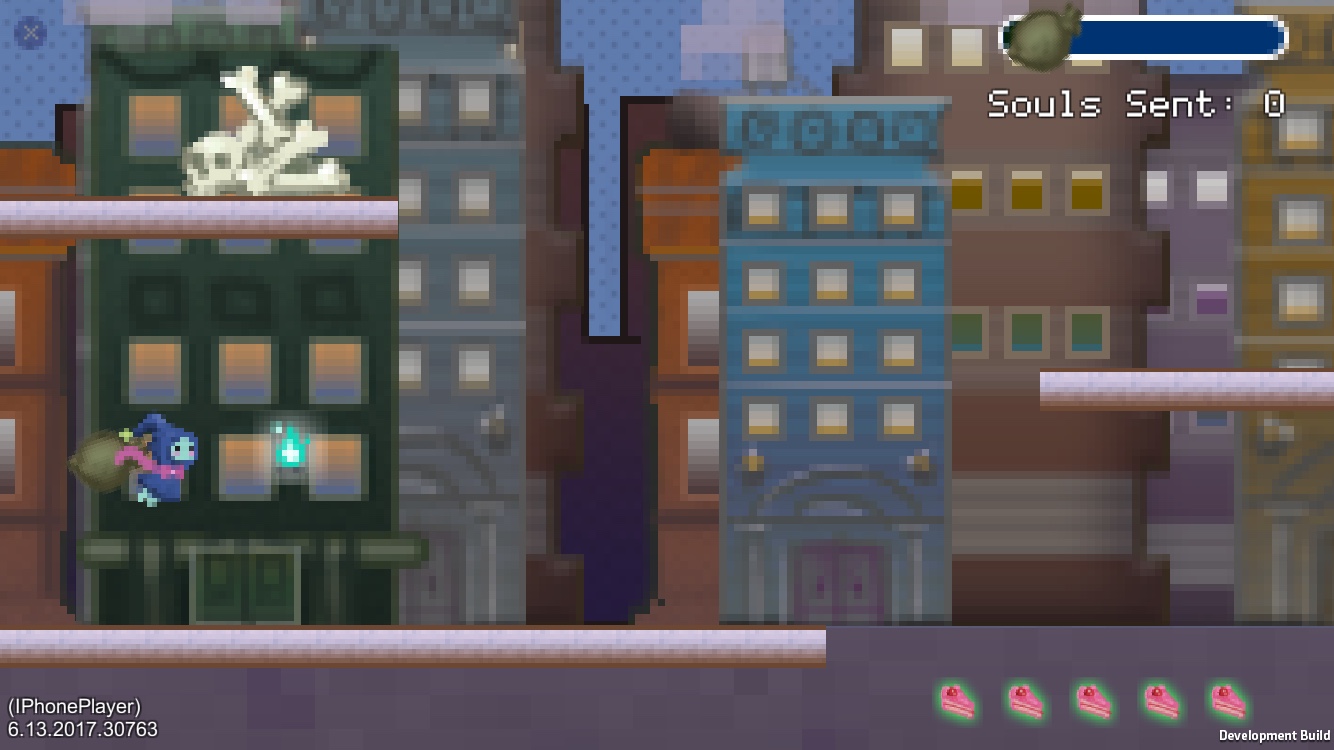
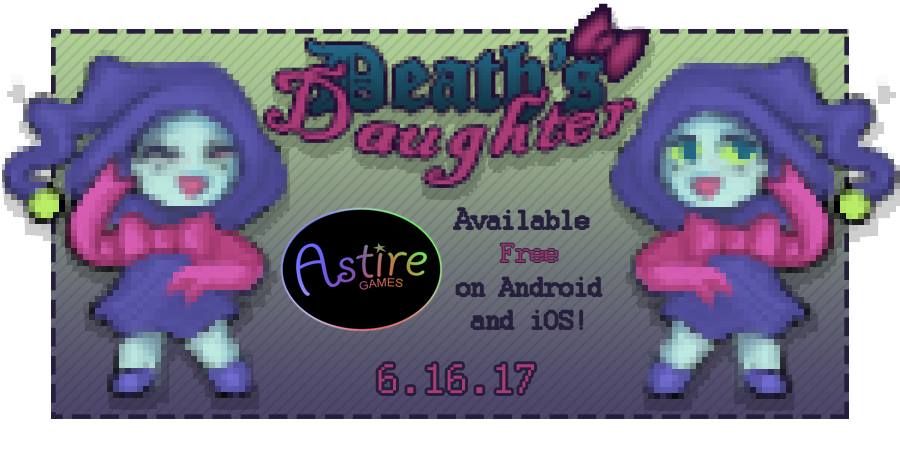
The second team of interns at Astire Games just wrapped up their project Death's Daughter. It is an endless runner on Android and iOS where you play as the daughter of the Grim Reaper helping him reap souls.

Some cute and interesting things they did with their mechanics - the character you play is very young, and the souls weigh her down both figuratively and literally. She carries the souls in a bag on her back and drops them off at courier checkpoints, but as the bag fills with souls she moves slower and it becomes more difficult to clear obstacles. If her bag has too many souls it will tear open and she will drop them all and have to start over. One of the obstacles she faces is a black cat, which gives nine souls if she hits it - this can be good or bad for the player depending on how full your bag is!

The game went live today on Google Play and iTunes, but the interns will be continuing their internship for another week to release updates to the game based on reviews and feedback from players. We hope you will play and give feedback!


Some cute and interesting things they did with their mechanics - the character you play is very young, and the souls weigh her down both figuratively and literally. She carries the souls in a bag on her back and drops them off at courier checkpoints, but as the bag fills with souls she moves slower and it becomes more difficult to clear obstacles. If her bag has too many souls it will tear open and she will drop them all and have to start over. One of the obstacles she faces is a black cat, which gives nine souls if she hits it - this can be good or bad for the player depending on how full your bag is!
The game went live today on Google Play and iTunes, but the interns will be continuing their internship for another week to release updates to the game based on reviews and feedback from players. We hope you will play and give feedback!
Tuesday, May 9, 2017
Game Prototyping in Unity, Part 2: Art and Sound Integration
This is Part 2 of my short blog series "Game Prototyping in Unity" about my recently released tutorial. If you have not already read Part 1 I recommend starting there!
In the second module of my tutorial I cover integrating art and sound in Unity and adding lighting and particles.
The first step is bringing in your model and texture files.

Then you will create a new material in Unity. Unity materials have a lot of properties you can work with, but the easiest ones to start with are the diffuse color (which is just the color of the material), normal color (which determines the detail or roughness of the surface), and specular or metallic color (giving it a shiny quality).

When you are done setting up your models with materials and textures, you can turn each art asset into a refab and replace your whitebox with art.

Make sure there are no areas where the player can walk out of the level. You don't need to follow your original layout, just use it as a general guide.

Once your layout is replaced with art it's time to add some lighting. For this type of level I want to use torches to give it a medieval feel. So I used a fire effect from Unity's default particle package and made some modifications so it would fit with this art style.

The flame particle system comes with a point light, but I also like to add a couple more point lights around each torch so you can see the details of the torch.

Once you have your bright areas, be sure to give some thought to lighting your dark areas. It's tempting to just keep dark areas unlit and leave them mostly black, but that generally doesn't look good in games because the player really can't see anything at all.

If you want to keep the feeling of darkness but still give the player enough visibility to play, use some dark blue lighting to fill the darkest areas.

When you are done, you'll have a well-lit level that conveys mood as well as giving visibility.

The final step in asset integration is adding sound effects. Rather than attaching ambient sounds to the main camera, try adding ambient audio sources as 3D sound around the scene, so as the player walks the sound changes. This helps bring the level to life.

If you enjoyed this blog post, please check out the video tutorial on Pluralsight which will take you step-by-step through this whole process! The next section will cover creating a character controller.
Thanks for reading!
In the second module of my tutorial I cover integrating art and sound in Unity and adding lighting and particles.
The first step is bringing in your model and texture files.

Then you will create a new material in Unity. Unity materials have a lot of properties you can work with, but the easiest ones to start with are the diffuse color (which is just the color of the material), normal color (which determines the detail or roughness of the surface), and specular or metallic color (giving it a shiny quality).

When you are done setting up your models with materials and textures, you can turn each art asset into a refab and replace your whitebox with art.

Make sure there are no areas where the player can walk out of the level. You don't need to follow your original layout, just use it as a general guide.

Once your layout is replaced with art it's time to add some lighting. For this type of level I want to use torches to give it a medieval feel. So I used a fire effect from Unity's default particle package and made some modifications so it would fit with this art style.

The flame particle system comes with a point light, but I also like to add a couple more point lights around each torch so you can see the details of the torch.

Once you have your bright areas, be sure to give some thought to lighting your dark areas. It's tempting to just keep dark areas unlit and leave them mostly black, but that generally doesn't look good in games because the player really can't see anything at all.

If you want to keep the feeling of darkness but still give the player enough visibility to play, use some dark blue lighting to fill the darkest areas.

When you are done, you'll have a well-lit level that conveys mood as well as giving visibility.

The final step in asset integration is adding sound effects. Rather than attaching ambient sounds to the main camera, try adding ambient audio sources as 3D sound around the scene, so as the player walks the sound changes. This helps bring the level to life.

If you enjoyed this blog post, please check out the video tutorial on Pluralsight which will take you step-by-step through this whole process! The next section will cover creating a character controller.
Thanks for reading!
Thursday, December 29, 2016
Entrepreneurship, Success, and Impostor Syndrome (and Failure)
A note before reading this post:
I wanted to write an "end of year" post about all of the cool things I got to do this year, but as I started to write it I was filled with doubt...I didn't feel like my accomplishments were worth writing about, or that they should even be labeled as "accomplishments" at all.So I decided to make this post a combination of my year in review and a look at Impostor Syndrome:
“The beauty of the impostor syndrome is you vacillate between extreme egomania and a complete feeling of: ‘I’m a fraud! Oh God, they’re on to me! I’m a fraud!’ So you just try to ride the egomania when it comes and enjoy it, and then slide through the idea of fraud.” – Tina Fey
Most of my blog includes what I consider to be useful information to the reader, however this post will focus much more on me and my work. I believe that anytime you write something you should consider what value it brings to the reader, so...why should you invest your time to reading about my personal thoughts? Well, first I hope this helps anyone else struggling with the same doubts and fears to know they are not alone, and second it may give you some ideas and inspiration for things you can go out and do. Most likely, everything I did this year is within your reach!
Entrepreneurship, Success, and Impostor Syndrome (and Failure)
Lately I've been tormented with feelings of doubt and uncertainty surrounding my startup ventures as an Indie Dev. In spite of the fact that I started a studio, released a couple of games, and hired a small part-time team, I still don't really feel like an entrepreneur, or even like an indie dev. Is Astire Games even a real studio? Is it a real startup? Am I really a founder? As a hypochondriac, I know with certainty that I have just about any syndrome I read about, but this was particularly true when I learned about Impostor Syndrome. No doubt in my mind, I have Impostor Syndrome.Impostor Syndrome, for those who don't know, is the nagging feeling that no matter what you accomplish somehow you are faking it, and soon everyone will find out you are a fraud. Even as I reread the description of Impostor Syndrome, I began to wonder if I am even allowed to have it, because the prerequisite to Impostor Syndrome is having accomplished something. What have I even accomplished that would allow me to doubt those accomplishments?!?
I'm sure there are people out there who feel successful, but I am not one of them. There are three possible reasons for this - 1. because I am actually not successful, 2. because I have extremely high standards for success, or 3. because even though I have accomplishments that meet my criteria for success I am in denial of those accomplishments. As a person committed to reason and logic, I am willing to objectively assess the second two possibilities, even though my instinct is to believe the first one.
So, I am going to list out all of the good things that happened in my life in 2016 (in terms of my career) which I would consider accomplishments, or evidence of success, because the only way to objectively assess anything is with evidence. Towards the end, I also want to talk about learning from failure (and some heartbreaking failures I experienced this year and what I learned from it).
Successes of 2016
1. Founded Astire GamesThis was just some paperwork and $20 for the DBA, however it felt really good to give a name to the company I was trying to start. The reason I consider this an accomplishment is because it was the first time I really committed to my goal of founding a studio. I said "I am doing this!" and then I signed the papers.
2. Moderated a VR panel at PAX South
I'd had a handful of friends speak on panels at conferences the previous year, and I was envious of their opportunity and bravery, so this year I submitted a VR panel to the PAX South conference and it was accepted in January. That was my first time moderating a panel, and my first time speaking at a major conference in my field (I had previously given a talk at Games for Health, but it was quite a small conference - but a good experience none-the-less). The VR panel was an amazing opportunity and I learned a lot from the experience - how to pick questions based on the audience, the importance of having extra questions separate from the core questions, and how to make sure all of the panelists have topics they are particularly interested in. It also gave me the confidence I needed to keep going out and giving talks.
3. Shipped Slapdash Bones for Android
This was my first self-published title and the first release of Astire Games. Though it was a small mobile game, it gave me the confidence to say "yes, I can publish my own games." It also resulted in Astire Games becoming a register Android developer on Google Play. The process to become a Google Play developer was not particularly complicated, it just took some time and focus to set everything up, and it felt really good when I was done.
4. Shipped Cat Cave for Android
My second self-published title and release of Astire Games, and the first game from Astire to be developed by a team! I rallied some friends - an Artist, Sound Designer, and Programmer - and set about organizing design documents and task lists, setting up version control, and monitoring the quality and giving feedback (as well as all of the level design, Unity integration, and a fair amount of gameplay programming). A lot went into this game, and when it was released I did a big push for promoting on social media, which was a learning experience in itself.
5. Guest lecturer at the DSGA
One of my alma maters, the DSGA at UT, invited me back as a speaker. This was pretty cool because I was actually invited by the students. They had very few non-male speakers throughout the year, so the students set out to find some in the last couple of months (although I do not identify as female, I am gender non-binary so I do identify as "non-male").
6. Accepted to Oculus Launch Pad
I submitted a game concept (very early idea that led to Sundown Arcadia) to the Oculus Launch Pad diversity summit and was accepted. They flew us all out to Facebook HQ for some hands-on training and to give us free hardware (a Gear VR complete with controller and Samsung phone).
7. Panelist on a VR panel at the Texas Women in Games Con
One of my panelists from PAX South recommended me as a speaker on a panel he was moderating. It was similar content, but exciting to hear new perspectives and to have a turn as a panelist instead of a moderator.
8. Shipped Cat Cave for iOS
I decided it was time to go cross-platform and start releasing my mobile games for iOS. Becoming a registered Apple developer was far more complicated (and more expensive) than becoming a Google Play developer, but it allowed me to reach a much larger audience with my game.
9. Cat Cave was reviewed by several Game Reviewers
The first time a game review site approached me and asked about writing a review for Cat Cave, I was over-the-moon with excitement. We ended up getting 3 reviews published on review sites and one video review on Youtube.
10. Left my AAA day-job to run Astire Games full-time
You might be wondering why this is an accomplishment. Well, it takes a lot of courage, confidence, and energy to leave a reasonably well-paying job doing something you enjoy, and it is very scary to leave that job and jump into the unknown. I had no idea what I was getting myself into, and I still don't!
11. Ran a 2-week summer camp for high school kids learning to make games
This was probably my proudest moment in 2016. I had to assemble the curriculum, plan lectures and assignments, and decide how best to approach a topic I am familiar with for an age group I am not familiar with. And then running the camp day-to-day: 8 hours a day for two weeks, watching them create amazing content, taking them to lunch, playing games, trying to keep cliques from forming...It was an incredible and exciting challenge. Then at the end watching them show their games to their parents!
12. Hired contractors to work on Cosmos Arena
My first time paying people to work on my game! Granted, not very much. But still, it was a cool process, and it gave me a chance to step back a little and watch the work come together without being overbearing on every aspect of the project.
13. Was the featured speaker at a Unity Women in Gaming workshop
I was flattered when Unity told me they were coming to Austin to give a workshop and asked if I would like to be the featured speaker. The workshop was for current college students who want to work in games, so I prepared a talk on the different areas within Game Design, and how designers work together and with other disciplines (design is the least-defined discipline in game development).
14. Moderated a VR panel at PAX West
This was the same panel I moderated at PAX South, but for a much larger and more prestigious conference.
15. Sundown Arcadia accepted to the Austin Game Conference Intel Showcase
Intel had an online submission form for indie games, and I submitted my Gear VR game Sundown Arcadia. I was one of the 10 selected to pitch and present a game at the Austin Game Conference.
16. Sundown Arcadia awarded "Most Innovative" by Intel Showcase judges
Of the 10 games pitched at the Austin Games Conference, Sundown Arcadia was one of the 4 chosen for awards. The award it won was for "Most Innovative" because it was completely gaze-based. It also led to me forming a relationship with the Tobii Eye Tracker team, who wanted me to port my game to their platform.
17. Nominated as a faculty "All Star" at the Art Institute where I teach
Every quarter the Art Institute holds nominations for "All Star" students and faculty, and I was honored to be nominated as a Faculty All Star for the Summer Quarter.
18. Pitched Sundown Arcadia to Oculus and Sony reps at IndieCade
I was lucky enough to get an Indie Xchange pass to IndieCade from a friend who wasn't able to go, and that gave me the opportunity to set up meetings with publishers. Oculus and Sony both had reps there, so I set up a meeting with each of them and I got 5 minutes to pitch them my game. It was very intimidating!
19. Credited on two shipped AAA titles (COD: MWR and Mafia III)
In my time at Certain Affinity I worked on two different AAA titles, and both shipped around October this year. Scrolling through the credits and seeing my name really made me feel like my hard work was worth it.
20. Speaker at Unite LA on Interface Design
My first major conference solo talk, and also one of the best talks I think I've ever given. You can watch it here.
21. Hired a team of interns
A few weeks ago I announced to my students that I would be running a small internship program as part of Astire Games, and would publish any reasonably high-quality work created by those interns. Over the past couple of weeks I have been accepting resumes and portfolios, and the review process was pretty tough. I discovered that it was fairly easy to judge artists and designers by their portfolios, but for scripters I needed a little more to work with, so I made a simple scripting test. After reviewing all of the applicants, I selected a team of 6 interns who will start working in January. One thing I felt was really important after reviewing the applicants was giving feedback to the ones I did not choose - this is not very common of job applications, but since many of them are my students I want them to improve on their job application process.
Failures of 2016
Without evil, there can be no good. We do not recognize our happiness until we have felt sadness. And so, to appreciate success we must acknowledge our failures.1. Cat Cave downloads did not meet expectations
I went into the Cat Cave release with high hopes, and figured that since I went through rigorous social media promotion I could hope to get at least a thousand day-one downloads. Cat Cave total downloads to-date hovers just below 400 (including both Android and iOS). Lesson learned - promotion is not enough to get your game out there. Sadly, I still don't know what is the right approach here. Make a better game I guess?
2. Panels rejected for GDC
After my successes with other VR Panels I thought I would have a good chance to get a VR panel in to the biggest game conference - GDC. That did not pan out, in fact we didn't even make it to the second round of reviews. In case the VR section of GDC was too saturated, I submitted two other talks in other areas, and both of those were rejected as well. I do not think my talks are not high enough quality for GDC, but I do think I need to re-evaluate how I approach the submission process.
3. Not selected (or even reviewed) for Oculus Launch Pad scholarship
This was quite a disappointment since my Sundown Arcadia pitch was doing so well at other places. The Oculus Launch Pad I mentioned earlier offered a scholarship to fund full development of a few of the games in the Launch Pad. There was a complication with my submission - I joined a roller derby over the summer and had a bad injury just a few days before the submission deadline which made it impossible for me to use my right arm (I could not even hold a mouse). I asked for an extension so I could record my video and type up my submission (my playable demo was nearly done at that point, I just needed to finish the submission). They granted my extension, I submitted, I was told it had been included in the submissions for judging, and I thought no more about it for a couple of months. They had some change of staff before announcing the winners, and I decided to ask about my submission. The new people told me that since my submission was late they had removed it from consideration and it had not been reviewed. I told them about the extension, but they either did not believe me or did not think I deserved an extension, because they said they would still not be reviewing it. What I learned from this - don't trust anyone. Just kidding, what I really learned was to get things like that in writing because of the likelihood someone else won't believe it (I also learned that Facebook messenger does not count as "in writing").
4. Unable to find Client Work
I have a handful of contractors working off-and-on with Astire Games, and I would really like to get a client contract project going so that I can have work for my contractors that I can actually pay them for. I've applied quite a few places on Upwork and Unity Connect and have also been asking around people I know in the industry, but so far nothing has panned out.
A Year in Review
2016 was probably my most successful year in terms of my career. The failures I had I believe I can work on and do better next year when I try again. The only real way to fail is to stop trying. Teaching is going well, Astire Games is going strong, and beginning in 2017 I plan to form an LLC. I also think 2017 will be the year I start looking for investors in my studio.Wednesday, October 19, 2016
IndieCade Festival
Over the weekend I had the fantastic opportunity to hang out at the IndieCade Festival for Independent Game Developers. IndieCade is one of my favorite game dev events because it is really focused on Indies - it showcases the best indie games in development (or recently released), it offers indie devs a chance to network with each other and with potential publishers, and it has a great lineup of talks targeting the most useful information for development as an indie studio.
There were four talks I found particularly useful - the first was called "So you want to start a game company? Corporate Formation and IP Strategy" and was led by Jonathan Pearce. I've been operating Astire Games as a Sole Proprietor with a DBA (I hope...), but I have run into some limiting factors by not being incorporated (most notably I've been trying to become a Sony developer, and as far as I can tell you need confirmation of your corporate entity). Anyway, I've had a lot of concerns and questions about forming an LLC versus an Inc, issues with IP and with paying employees (or offering rev share), the potential for incorporating in a different state, and deep-seated fears about legal issues arising in my entrepreneurial endeavors. Jonathan's talk was both inspiring and informative, and laid to rest some of my biggest concerns, though I still have some more decisions to make - I am completely on-the-fence about what state to incorporate in.
The second talk I attended was actually a workshop called "Paper Prototyping" and was run by several experienced educators, one of whom I spent some time talking to - Michael Annetta (sadly I do not recall the names of the others involved). This two-hour session took us on the ins and outs of developing a game idea from scratch, and although a lot of it was stuff I already knew, it was awesome to see it from a new perspective and it gave me some great ideas for better ways to teach design and prototyping (as you know, I teach level design, UI design, and rapid prototyping at the Art Institute). This workshop was also very active and I made some new friends that I continued to see throughout the rest of the festival.
On the second day I finally ended up at a VR talk called "Non Photoreal VR" about the visual design side of VR, dealing with performance issues, and tricks for making an environment feel "more 3D" using parallax, lighting, and fog.
The last talk I attended was by a friend of mine - Chris DeLeon (@ChrisDeLeon) - called "Starting Meetups that Make Games." In his talk, Chris gave some background on his experience running several different game developer meetups/clubs where participants would form teams and create and publish games in their spare time (often either students or folks working in a non-game field, or game developers who want to try a different discipline outside of their normal job). Two of the biggest problems facing game dev students when they graduate are 1.) not having a shipped title and 2.) not having experience working in a cross-discipline team. As we learned in this talk, a game dev meetup can help solve both of these problems.
I was inspired by Chris' talk to set into motion something I have been considering for a while - I want to give my students at the Art Institute (as well as students at the other colleges in Austin) a chance to get some hands-on work in an interdisciplinary group on a game that will ship. This is now one of my top-most priorities - I have always been passionate about the idea of improving education, and now here is something very tangible that I am very capable of contributing.
Aside from the four fabulous talks, IndieCade also offered me one other tremendous opportunity. IndieXChange (one of the IndieCade tracks) offers something called "Speed Dating" where developers get five minutes to meet with a publisher and pitch their idea, then can follow up afterward with those publishers. I was lucky enough to get to meet with reps from Sony and a rep from Oculus, and discuss my VR project Sundown Arcadia. It was an exhilarating experience - I always love an opportunity to talk up my games, and having an avid audience of publishers listening was quite thrilling.
One of the best parts about IndieCade, in my opinion, is the quality of the connections being made. At your average game dev conference you walk away with a big stack of business cards of people you are probable not going to contact. I left IndieCade with just seven business cards, but I have a very specific follow-up email for each one of them.
Between the superb talks, the phenomenal pitch opportunity, and the unique networking connection, I would call my IndieCade experience a success!
There were four talks I found particularly useful - the first was called "So you want to start a game company? Corporate Formation and IP Strategy" and was led by Jonathan Pearce. I've been operating Astire Games as a Sole Proprietor with a DBA (I hope...), but I have run into some limiting factors by not being incorporated (most notably I've been trying to become a Sony developer, and as far as I can tell you need confirmation of your corporate entity). Anyway, I've had a lot of concerns and questions about forming an LLC versus an Inc, issues with IP and with paying employees (or offering rev share), the potential for incorporating in a different state, and deep-seated fears about legal issues arising in my entrepreneurial endeavors. Jonathan's talk was both inspiring and informative, and laid to rest some of my biggest concerns, though I still have some more decisions to make - I am completely on-the-fence about what state to incorporate in.
The second talk I attended was actually a workshop called "Paper Prototyping" and was run by several experienced educators, one of whom I spent some time talking to - Michael Annetta (sadly I do not recall the names of the others involved). This two-hour session took us on the ins and outs of developing a game idea from scratch, and although a lot of it was stuff I already knew, it was awesome to see it from a new perspective and it gave me some great ideas for better ways to teach design and prototyping (as you know, I teach level design, UI design, and rapid prototyping at the Art Institute). This workshop was also very active and I made some new friends that I continued to see throughout the rest of the festival.
On the second day I finally ended up at a VR talk called "Non Photoreal VR" about the visual design side of VR, dealing with performance issues, and tricks for making an environment feel "more 3D" using parallax, lighting, and fog.
The last talk I attended was by a friend of mine - Chris DeLeon (@ChrisDeLeon) - called "Starting Meetups that Make Games." In his talk, Chris gave some background on his experience running several different game developer meetups/clubs where participants would form teams and create and publish games in their spare time (often either students or folks working in a non-game field, or game developers who want to try a different discipline outside of their normal job). Two of the biggest problems facing game dev students when they graduate are 1.) not having a shipped title and 2.) not having experience working in a cross-discipline team. As we learned in this talk, a game dev meetup can help solve both of these problems.
I was inspired by Chris' talk to set into motion something I have been considering for a while - I want to give my students at the Art Institute (as well as students at the other colleges in Austin) a chance to get some hands-on work in an interdisciplinary group on a game that will ship. This is now one of my top-most priorities - I have always been passionate about the idea of improving education, and now here is something very tangible that I am very capable of contributing.
Aside from the four fabulous talks, IndieCade also offered me one other tremendous opportunity. IndieXChange (one of the IndieCade tracks) offers something called "Speed Dating" where developers get five minutes to meet with a publisher and pitch their idea, then can follow up afterward with those publishers. I was lucky enough to get to meet with reps from Sony and a rep from Oculus, and discuss my VR project Sundown Arcadia. It was an exhilarating experience - I always love an opportunity to talk up my games, and having an avid audience of publishers listening was quite thrilling.
One of the best parts about IndieCade, in my opinion, is the quality of the connections being made. At your average game dev conference you walk away with a big stack of business cards of people you are probable not going to contact. I left IndieCade with just seven business cards, but I have a very specific follow-up email for each one of them.
Between the superb talks, the phenomenal pitch opportunity, and the unique networking connection, I would call my IndieCade experience a success!
Friday, September 30, 2016
Cosmos Arena
If you are an indie dev, you understand the struggle of sticking to one project. For the past few months I've been juggling two projects, one you know is my VR game Sundown Arcadia, but the second is a multiplayer PC game in the vein of Smash Bros, Rayman, and Waking Mars. It is a 4 Player platformer battle arena based on an alien planet in space, where players choose to play cooperatively or competitively...each level has to be "won" by destroying the alien generator at the top, but players can kill each other and you can either win together as a team, or you can kill your team and win alone.
Right now we have the basic character and movement (floaty jumps with a jet pack), a simple obstacle (alien plant trap), the ability to shoot teammates, multiplayer controller input, and the win condition. It's exciting to see it coming into a playable form! This is the largest team I've formed for one of my projects, we have a character artist, environment artist, two programmers, and a sound designer. Gameplay videos coming soon!
Tuesday, May 3, 2016
The Making of Cat Cave
Cat Cave was my second self-published title, but it was actually a lot of first for me. It was my first endless runner. It was my first 2D game. It was the first time I formed a team to work on one of my ideas (I found an artist, a sound designer, and a second programmer). It was the first time I attempted a port to iOS. And the second release of Cat Cave was the first time I took promotion really seriously.
I've learned a lot from the games I have released so far, but I think the most valuable thing I have learned is you can never do too much work when it's something you care about. As a single cat mamma, I have no human children, and no husband (or wife) to take care of, so my games are really like my children - I look forward to leaving work in the evenings so I can go home and spend time with them. And I feel guilty any time I have a spare moment that I choose not to spend with them.
To some this may seem like an unhealthy obsession, but for me the things I make are the strongest justification for my existence.
In total, I estimate that I invested around 120 hours into the development of Cat Cave. I wish I had kept more thorough track, but I believe the breakdown went something like this:
I've learned a lot from the games I have released so far, but I think the most valuable thing I have learned is you can never do too much work when it's something you care about. As a single cat mamma, I have no human children, and no husband (or wife) to take care of, so my games are really like my children - I look forward to leaving work in the evenings so I can go home and spend time with them. And I feel guilty any time I have a spare moment that I choose not to spend with them.
To some this may seem like an unhealthy obsession, but for me the things I make are the strongest justification for my existence.
In total, I estimate that I invested around 120 hours into the development of Cat Cave. I wish I had kept more thorough track, but I believe the breakdown went something like this:
- First Release
- Development - 30 hours
- Project Management - 10 hours
- Promotion - 10 hours
- Second Release (Major Update)
- iOS Port - 15 hours
- Development - 15 hours
- Project Management (including running beta test) - 10 hours
- Promotion - 30 hours
Another valuable lesson I learned is the importance of building hype. Don't release your game the day it is finished. And don't wait until it is finished to start talking about it. Talk about it all the time while you are making it. Pick a tentative release date far in the future. When you finish your game, get everything confirmed, and get it approved by all of the powers that be, THEN confirm your release date at least several days in advance. Then you must WAIT. Don't do anything to break the game. Don't do anything to put it in jeopardy on whatever platform you publish to. Don't let your anxious fans convince you to release it early. Just wait. And keep talking about it.
Speaking of which, here are the download links for Cat Cave, which is now available on Google Play and iTunes!
iOS: https://itunes.apple.com/us/app/cat-cave/id1104696928?ls=1&mt=8
Android: https://play.google.com/store/apps/details?id=com.Astire.CatCave
PC: https://moarkitties.itch.io/cat-cave
Thanks for playing!
Speaking of which, here are the download links for Cat Cave, which is now available on Google Play and iTunes!
iOS: https://itunes.apple.com/us/app/cat-cave/id1104696928?ls=1&mt=8
Android: https://play.google.com/store/apps/details?id=com.Astire.CatCave
PC: https://moarkitties.itch.io/cat-cave


Tuesday, April 26, 2016
Marketing vs Promoting
In my opinion, the biggest difference between an indie developer and a large game company is the marketing budget. Most indie developers cannot afford to distribute ads the way Blizzard or Riot can. So how do indies get the word out?
While talking to a fellow developer recently, I asked him how he promoted his game and he said "I didn't. We didn't run any ads or anything." This was an interesting break in communication for me, because in my mind if you don't promote your game at all you get 0 downloads...to me, promoting a game doesn't just mean running ads, it means all of the little things you do to make your game known to the world. Every Facebook or Twitter post, every friend you tell, every developer forum you post in for help or advice, and ESPECIALLY everyone you ask to beta test your game - all of those things are how you promote a game without penny in your marketing budget.
So what can you do to maximize your promotion without investing in marketing? That seems to be the big question these days. I can't go more than a few days without seeing a Twitter post about "HERE IS THE KEY YOU NEED SO YOU CAN DO SELF PROMOTION RIGHT" followed by a link to buy some book or online course. Well I'm here to tell you there is no "key" to self promotion.
I heard someone say recently that the reason big AAA games are sometimes "canned" right at the end of 3 years of a development cycle is because the cost of marketing is equal to or greater than the cost of development. That's pretty crazy. So if you are making a game by yourself, your development has no cost except the time you are investing in it, and you obviously don't have a AAA budget for marketing, what is there to do? If we compare to the AAA model where the marketing budget is equal to the development budget, it makes sense then that the correlation for indie dev is a time investment. You invest an equal amount of time in promotion that you invest in development. That may seem like a staggering amount of time, but think of all the things you can do with that time.
Some self-promotion strategies:
While talking to a fellow developer recently, I asked him how he promoted his game and he said "I didn't. We didn't run any ads or anything." This was an interesting break in communication for me, because in my mind if you don't promote your game at all you get 0 downloads...to me, promoting a game doesn't just mean running ads, it means all of the little things you do to make your game known to the world. Every Facebook or Twitter post, every friend you tell, every developer forum you post in for help or advice, and ESPECIALLY everyone you ask to beta test your game - all of those things are how you promote a game without penny in your marketing budget.
So what can you do to maximize your promotion without investing in marketing? That seems to be the big question these days. I can't go more than a few days without seeing a Twitter post about "HERE IS THE KEY YOU NEED SO YOU CAN DO SELF PROMOTION RIGHT" followed by a link to buy some book or online course. Well I'm here to tell you there is no "key" to self promotion.
I heard someone say recently that the reason big AAA games are sometimes "canned" right at the end of 3 years of a development cycle is because the cost of marketing is equal to or greater than the cost of development. That's pretty crazy. So if you are making a game by yourself, your development has no cost except the time you are investing in it, and you obviously don't have a AAA budget for marketing, what is there to do? If we compare to the AAA model where the marketing budget is equal to the development budget, it makes sense then that the correlation for indie dev is a time investment. You invest an equal amount of time in promotion that you invest in development. That may seem like a staggering amount of time, but think of all the things you can do with that time.
Some self-promotion strategies:
- Start a dev log describing your development process, challenges you overcome, advice for new-comers
- Start a dev stream where you record your development sessions to share with the world
- Become active on Social Media - leverage Twitter and Facebook to get a following of people interested in your ideas and your progress, a support system that is prepared to give you feedback and cheer on your success
- Connect with streamers and reviewers and try to find some that may be interested in reviewing your game
- Become active on a relevant subreddit (in the reddit community, self-promotion is frowned upon unless you are an active contributor who is genuinely interested in the conversation)
- Run a beta test - there is probably no better way to get people interested in your game before release than to ask them to play it before it is available
Subscribe to:
Posts (Atom)